
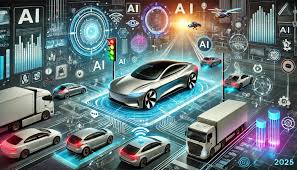
The modern automobile is no longer just a mechanical machine — it’s a sophisticated computer on wheels. Artificial intelligence (AI) and advanced sensors have redefined what cars can do, transforming driving from a purely human task into a seamless collaboration between man and machine. From autonomous systems and predictive maintenance to driver monitoring and personalized in-car experiences, AI and sensor technology are driving the next great revolution in mobility.
1. The Brain and the Eyes of the Modern Car
If data is the new fuel, then AI and sensors are the engine and eyes of the modern vehicle. Today’s cars are equipped with an array of sensors — radar, LiDAR, ultrasonic sensors, cameras, and infrared detectors — each continuously gathering information about the vehicle’s surroundings.
These sensors feed real-time data to AI-powered processors that analyze everything from road markings and pedestrian movement to weather conditions and traffic flow. Together, they enable advanced driver-assistance systems (ADAS) such as adaptive cruise control, lane-keeping assist, automatic emergency braking, and blind-spot detection.
As processing power and machine learning algorithms improve, vehicles can now make split-second decisions that enhance both safety and comfort — decisions that once depended solely on human reflexes.
2. AI-Powered Autonomous Driving
Autonomous driving is one of the most visible applications of AI and sensor integration. The road to full autonomy — from Level 0 (no automation) to Level 5 (fully autonomous) — has been long and complex, but 2025 marks a critical point in this journey.
Companies like Tesla, Waymo, Mercedes-Benz, and Baidu are testing vehicles capable of Level 3 and Level 4 autonomy, where the car can handle most driving tasks under certain conditions without human intervention.
At the core of these systems is deep learning, a branch of AI that trains neural networks to recognize objects, predict movement, and make decisions. The vehicle uses its sensor suite to build a dynamic, 3D map of the environment, constantly updating as conditions change.
For example, LiDAR (Light Detection and Ranging) provides a precise depth perception map, while cameras offer visual confirmation, and radar ensures reliability in poor visibility. The fusion of these sensors — often called sensor fusion — allows the car to perceive the world with accuracy rivaling human senses, but with faster reaction times.
3. Predictive Maintenance and Smart Diagnostics
AI isn’t just changing how cars drive — it’s transforming how they are maintained. Modern vehicles are equipped with onboard diagnostic systems that constantly monitor engine performance, fluid levels, brake wear, and battery health.
AI algorithms analyze this sensor data to detect anomalies long before they cause breakdowns. For example, if a vibration pattern in the suspension deviates from the norm, the system can alert the driver and suggest a service appointment. Some manufacturers even allow vehicles to schedule maintenance automatically, contacting service centers when a component is predicted to fail.
This proactive approach, known as predictive maintenance, helps reduce repair costs, improve reliability, and extend the lifespan of the vehicle — all while minimizing downtime.
4. Personalized Driving Experiences
AI is also redefining how drivers interact with their cars. Modern infotainment systems, powered by machine learning, can adapt to driver preferences over time.
For instance, the car might learn your preferred seat position, climate control settings, or music playlists based on the time of day or type of trip. Systems like Mercedes-Benz’s MBUX, BMW’s iDrive 9, and Tesla’s AI-based interface offer intelligent voice assistants that understand natural speech, enabling drivers to control navigation, entertainment, or phone calls hands-free.
Some advanced systems even use facial recognition and biometric sensors to detect driver fatigue, adjust lighting, or trigger safety alerts when drowsiness is detected. These subtle yet powerful AI-driven enhancements make daily driving safer, more comfortable, and more intuitive.
5. AI in Traffic and Safety Systems
Beyond individual vehicles, AI and sensors are improving the broader transportation ecosystem. Smart traffic management systems use vehicle data to optimize traffic light timing, reduce congestion, and improve fuel efficiency across entire cities.
Cars equipped with Vehicle-to-Everything (V2X) communication can share sensor data with infrastructure and other vehicles, helping predict hazards before they appear. For example, if a car ahead detects icy conditions or an accident, it can instantly warn nearby vehicles, allowing them to adjust speed or reroute.
In emergency scenarios, AI-based systems can automatically notify first responders, transmit precise GPS coordinates, and even share real-time camera footage — saving critical minutes that could mean the difference between life and death.
6. The Path Ahead: Challenges and Opportunities
While the potential of AI and sensors is enormous, it’s not without challenges. Data privacy, cybersecurity, and regulatory frameworks are major considerations as cars become more connected and autonomous. Automakers must balance innovation with strict data protection measures to ensure driver trust and safety.
Moreover, achieving full autonomy requires further advancements in AI training, sensor reliability, and real-world testing. However, as technology matures, the synergy between AI, sensors, and cloud computing will unlock unprecedented levels of safety, efficiency, and sustainability.
Conclusion: The Intelligent Road Ahead
AI and sensors have transformed modern cars from passive machines into intelligent partners. They see, think, and respond in ways that make driving safer, smarter, and more efficient than ever before.
From autonomous navigation to predictive diagnostics and personalized comfort, the integration of AI and sensory technology is redefining mobility as we know it. As innovation accelerates, the line between human intuition and machine intelligence continues to blur — steering us toward a future where the car isn’t just a vehicle, but a truly intelligent companion on the road.