
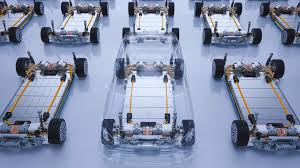
The automotive industry is undergoing the most dramatic transformation since the invention of the internal combustion engine. As governments, manufacturers, and consumers move toward cleaner and more sustainable mobility, electric vehicles (EVs) and hybrid technologies are evolving faster than ever. From solid-state batteries and ultra-fast charging to intelligent energy management and plug-in hybrid systems, the latest innovations are redefining how we drive, charge, and experience our vehicles.
1. The Rise of Solid-State Batteries
One of the most anticipated breakthroughs in EV technology is the arrival of solid-state batteries. Unlike traditional lithium-ion cells that use a liquid electrolyte, solid-state batteries rely on a solid electrolyte, which significantly enhances energy density and safety.
Companies like Toyota, QuantumScape, and Samsung SDI are leading the charge in this area. Toyota recently announced plans to commercialize its first solid-state-powered vehicle by 2027–2028, promising faster charging times—potentially from 0 to 80% in just 10 minutes—and ranges exceeding 600 miles (965 km) on a single charge.
In addition to performance gains, solid-state batteries are more resistant to overheating, reducing the risk of thermal runaway and fire hazards. If large-scale production becomes viable, these batteries could mark a major leap toward mass EV adoption.
2. Ultra-Fast Charging Networks
While improving battery technology is crucial, charging infrastructure is equally vital to the EV ecosystem. Automakers and energy companies are collaborating to build ultra-fast charging networks that rival the convenience of traditional fuel stations.
The latest 800-volt architecture—used by brands like Porsche (Taycan), Hyundai (IONIQ 5), and Kia (EV6)—enables charging speeds of up to 350 kW, adding more than 200 miles (320 km) of range in under 20 minutes.
Charging network providers such as IONITY in Europe and Electrify America in the U.S. are rapidly expanding coverage. Meanwhile, Tesla continues to enhance its Supercharger V4 technology, with upcoming compatibility for non-Tesla vehicles through the adoption of the North American Charging Standard (NACS). This open standardization effort could unify charging ports and simplify access for millions of drivers.
3. Smart Energy Management and Vehicle-to-Grid (V2G)
Beyond simple charging, modern EVs are becoming integral parts of the broader energy grid. The concept of Vehicle-to-Grid (V2G) allows EVs to return stored electricity to the grid during peak demand, helping stabilize energy supply while earning credit for owners.
Nissan, a pioneer in this field, has been testing V2G systems with its Leaf model in Japan and Europe for years. Ford has taken this a step further with its F-150 Lightning, enabling vehicle-to-home (V2H) capability that can power an entire house for several days during an outage.
Future EVs are expected to include AI-driven energy optimization, automatically deciding when to charge or discharge based on grid conditions, electricity pricing, and driver behavior. This interconnected approach transforms EVs from passive consumers to active participants in the renewable energy ecosystem.
4. Hybrid Systems Evolving with Intelligence
While full electrification grabs headlines, hybrid and plug-in hybrid (PHEV) technologies remain crucial transitional solutions. The latest hybrids are smarter, more efficient, and more seamless than ever before.
Manufacturers like Toyota, Honda, and Hyundai are enhancing their hybrid systems with predictive energy management that uses GPS data and driving patterns to optimize power usage. For example, when the system detects an upcoming downhill stretch, it may preserve battery charge for later use, ensuring the most efficient energy deployment across a journey.
The Toyota Prius 2024, for instance, boasts improved battery placement for better weight distribution, a more powerful electric motor, and over 50% greater EV-only range than its predecessor. Meanwhile, luxury automakers such as Lexus and BMW are integrating plug-in hybrid systems that deliver both exhilarating performance and extended zero-emission driving capabilities.
5. Software-Defined Vehicles and Over-the-Air Updates
Another defining feature of modern EVs and hybrids is their software-first design. Today’s vehicles are more like rolling computers, capable of receiving over-the-air (OTA) updates that continuously enhance performance, range, and features.
Tesla pioneered this model, but now nearly every major automaker—from Volkswagen to Rivian—has adopted the approach. OTA updates enable manufacturers to fix bugs, improve battery management, or even add entirely new functions without requiring a service visit.
Furthermore, advancements in artificial intelligence and machine learning are enabling vehicles to adapt dynamically to driver preferences, road conditions, and energy efficiency goals. The future of driving will increasingly rely on software intelligence as much as mechanical innovation.
6. Sustainability Beyond the Vehicle
The push for cleaner transportation doesn’t end with the car itself. Automakers are investing in sustainable manufacturing, battery recycling, and renewable energy sourcing to minimize environmental impact across the entire supply chain.
Volkswagen’s battery recycling facility in Salzgitter, Germany, and Redwood Materials in the U.S. are pioneering large-scale programs to recover valuable materials like lithium, nickel, and cobalt from used batteries. These efforts not only reduce waste but also lower production costs and dependence on mining.
Conclusion: A Smarter, Greener, Electrified Future
The latest advancements in EV and hybrid technology are shaping a transportation revolution that blends innovation, sustainability, and intelligence. From solid-state breakthroughs and ultra-fast charging to V2G connectivity and predictive hybrid systems, the road ahead promises cleaner, smarter, and more efficient mobility for everyone.
As automakers continue to invest heavily in electrification, the next decade will likely witness the convergence of performance, sustainability, and digital intelligence—a future where cars aren’t just vehicles, but vital components of a global clean-energy network.