
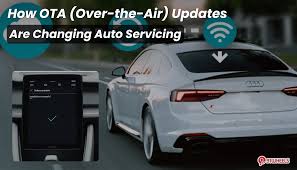
In the past, maintaining a car meant scheduling regular trips to the workshop — for software updates, recalls, and system diagnostics. But in the modern era of connected vehicles, that ritual is changing fast. Thanks to Over-the-Air (OTA) updates, cars are now becoming as easy to update as smartphones.
OTA technology allows manufacturers to send software upgrades, bug fixes, and even new features directly to vehicles through the internet — without the driver ever leaving their driveway. This innovation is transforming not only how cars are maintained but also how they evolve over time.
1. What Are Over-the-Air (OTA) Updates?
At its core, an OTA update is a wireless software update that’s delivered to a vehicle remotely via a secure data connection. It works much like the updates your phone or laptop receives automatically.
Modern cars are packed with software — from infotainment systems to advanced driver-assistance and battery management systems. Instead of manually installing upgrades at a service center, OTA technology enables manufacturers to push these updates directly to the car’s onboard computers.
Once the car receives the update package, it installs it automatically, often while parked or overnight. The result? A smoother, faster, and smarter vehicle — all without a trip to the dealership.
2. How OTA Updates Work
The process begins with vehicle connectivity. Most new cars are equipped with built-in cellular modems or Wi-Fi systems that allow secure communication with the manufacturer’s servers.
When an update is available, the car owner gets a notification through the vehicle’s interface or mobile app. Depending on the type of update, the installation may occur instantly (for minor fixes) or require the vehicle to be stationary and turned off (for major system upgrades).
Security is a top priority. Automakers use encrypted data channels and authentication protocols to ensure that only verified updates reach the car’s systems. The process is designed to prevent unauthorized access or tampering — ensuring that vehicles remain safe even while connected to the cloud.
3. Benefits of OTA Updates
The impact of OTA updates on car ownership is profound. Here are some of the biggest advantages:
a. Convenience
No more booking service appointments or waiting in line at the dealership. OTA updates happen automatically and often take just minutes, allowing drivers to enjoy improvements immediately.
b. Continuous Improvement
Cars no longer remain static after purchase. Manufacturers can enhance performance, improve efficiency, and fix software bugs throughout the car’s lifetime. For example, they might adjust battery management in electric vehicles to extend range or improve acceleration through updated algorithms.
c. Cost and Time Savings
Traditional recalls or updates often require owners to visit a service center — costing both time and money. OTA technology eliminates these logistical headaches by delivering solutions instantly and remotely.
d. Enhanced Safety
Critical safety fixes can now be deployed quickly. Instead of waiting for recall appointments, automakers can push urgent updates to every affected car simultaneously — reducing risk and improving public safety.
e. Sustainability
Reducing workshop visits also means fewer physical parts and materials are needed for maintenance, contributing to a smaller carbon footprint.
4. OTA Updates in Action
Many leading automakers are already leveraging OTA capabilities. For instance, updates can enhance infotainment features, refresh user interfaces, add new driver-assistance functions, or fine-tune energy consumption in electric vehicles.
Imagine buying a car that gradually gets better each year — new features, better fuel efficiency, and smoother performance — all delivered through the air. That’s the reality OTA brings.
It’s even possible for manufacturers to introduce subscription-based services via OTA, such as advanced navigation tools, heated seat controls, or enhanced autopilot features. This transforms cars into dynamic digital products that evolve long after purchase.
5. The Role of AI and Data in OTA Systems
Behind every OTA update lies a powerful ecosystem of data and artificial intelligence. Automakers continuously collect anonymized performance data from vehicles to detect trends, predict issues, and refine software behavior.
AI analyzes this data to identify where improvements are needed. If a particular sensor shows irregular patterns across thousands of cars, engineers can design a fix and deploy it remotely. This proactive approach not only improves reliability but also builds stronger trust between drivers and manufacturers.
6. Challenges and Considerations
While OTA updates bring enormous advantages, they also come with challenges.
Manufacturers must ensure cybersecurity remains airtight, as connected vehicles are potential targets for hacking. Likewise, software glitches could cause unintended side effects if not properly tested.
Moreover, regulatory bodies are still catching up with how to certify and monitor OTA systems, especially when they impact safety-critical functions like braking or steering. Transparency and compliance will be crucial as this technology becomes mainstream.
7. The Future: Cars That Age Gracefully
The biggest promise of OTA technology is longevity. Cars that once grew outdated after a few years can now remain current through ongoing digital updates. It’s a revolution in how we perceive automotive aging — from static hardware to evolving software ecosystems.
Just like smartphones receive regular improvements, tomorrow’s cars will keep learning and adapting — becoming safer, more efficient, and more intelligent over time.
In the near future, a trip to the workshop might become the exception, not the rule.
Over-the-Air updates mark a new era for the automotive world — one where convenience, innovation, and intelligence merge seamlessly. They empower car owners with continuous improvements and allow automakers to respond instantly to emerging needs or issues.
In this connected future, your car won’t just be a vehicle; it will be a living, learning system that evolves with you. Thanks to OTA technology, the workshop may soon become a thing of the past — and your driveway, the new service center of the future.