
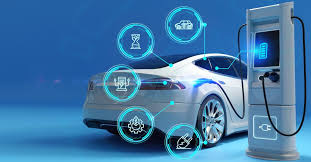
Electric vehicles (EVs) are transforming the automotive landscape, but one of their biggest challenges remains the same — the battery. Current EVs rely heavily on lithium-ion batteries, which have made incredible progress in performance and cost but still face limitations in range, charging time, and safety. Enter the next big leap in energy storage: solid-state batteries.
These next-generation batteries are often described as the “holy grail” of EV technology, promising to deliver longer range, faster charging, improved safety, and greater durability. But what exactly are solid-state batteries, and why are they considered the future power source for electric cars? Let’s break it down.
What Are Solid-State Batteries?
In a traditional lithium-ion battery, energy is stored and transferred through a liquid electrolyte, a chemical medium that allows ions (charged particles) to flow between the battery’s anode and cathode. This liquid is flammable and sensitive to temperature changes, which is why overheating and battery fires can be a concern in some EVs.
Solid-state batteries replace that liquid electrolyte with a solid material — often a ceramic, polymer, or glass-based substance. This seemingly simple change fundamentally transforms how the battery operates. By removing the liquid, the battery becomes more stable, compact, and potentially far more efficient.
The term “solid-state” refers to this all-solid structure: a solid anode, solid electrolyte, and solid cathode. The result is a battery that stores more energy in the same space and charges more rapidly, while also reducing fire risks.
Why Solid-State Batteries Are a Game-Changer
The promise of solid-state technology lies in its ability to overcome the weaknesses of conventional lithium-ion batteries. Here are the main advantages:
-
Higher Energy Density
Solid-state batteries can store significantly more energy in the same volume. This means electric cars could travel much farther on a single charge — potentially 50% to 100% more range than today’s EVs. For instance, an electric sedan that currently drives 400 kilometers could reach 600 or even 800 kilometers with a solid-state pack. -
Faster Charging
One of the biggest frustrations for EV owners is charging time. Solid-state batteries are capable of handling much higher charging speeds, potentially cutting charging time from hours to minutes. This could make EV charging nearly as fast as refueling a gasoline car. -
Improved Safety
Because solid electrolytes are non-flammable, they greatly reduce the risk of thermal runaway — the chain reaction that can cause battery fires. This makes EVs with solid-state batteries safer and more stable under high temperatures or during collisions. -
Longer Lifespan
Solid-state batteries degrade more slowly than liquid-based ones, offering a longer operational life. This means fewer battery replacements and less environmental waste over time.
The Challenges Holding Back Mass Production
Despite their impressive advantages, solid-state batteries aren’t yet ready for widespread use. Several significant challenges remain before they can be mass-produced at a reasonable cost.
-
Manufacturing Complexity
Producing solid electrolytes with uniform quality is far more difficult than assembling current lithium-ion cells. The manufacturing process requires high precision, and defects can reduce efficiency or cause early failure. -
Material Limitations
Finding the perfect solid electrolyte material is an ongoing challenge. It needs to allow fast ion movement, stay stable over thousands of charge cycles, and work across a wide temperature range. Researchers are still experimenting with ceramics, sulfides, and polymers to find the right balance. -
Cost
The advanced materials and manufacturing methods currently make solid-state batteries much more expensive than traditional lithium-ion versions. Until economies of scale kick in, they remain out of reach for mass-market vehicles. -
Durability Issues at Scale
Some prototypes have shown performance drops over time, especially under high-load driving conditions. Ensuring consistent, long-term reliability is another major engineering hurdle.
When Will Solid-State Batteries Arrive?
Automakers and battery startups around the world are racing to bring this technology to market. Many have demonstrated promising prototypes and are now building pilot production lines. The first solid-state batteries are expected to appear in high-end or limited-edition EVs before gradually expanding to mainstream models as costs fall and production methods mature.
Industry experts predict that the second half of the 2020s will mark the start of commercial use, with solid-state EVs becoming more common in the early 2030s. Once mass production becomes economically viable, this technology could completely redefine what drivers expect from an electric car.
The Future of Electric Mobility
Solid-state batteries represent more than just a technological improvement — they symbolize the next evolution in clean transportation. With their potential for ultra-fast charging, longer range, and higher safety, they could eliminate many of the concerns that have kept some consumers from switching to electric vehicles.
The road to commercialization may be complex, but the goal is clear: a future where EVs are more efficient, safer, and more convenient than ever before. As research continues and industry investments grow, solid-state batteries stand poised to power the next generation of electric mobility — bringing us one step closer to a fully electrified future.