
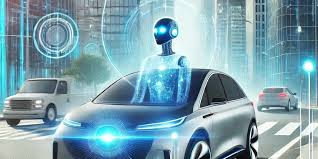
The automotive world is undergoing a massive transformation, and at the center of this evolution is artificial intelligence (AI). What was once a futuristic concept — cars that can think, learn, and respond — is now becoming a reality. From self-parking systems to predictive maintenance, AI is redefining how people interact with their vehicles and the road itself.
In 2025 and beyond, cars are no longer just machines that move us from one place to another. They are becoming intelligent companions — capable of understanding, adapting, and even anticipating our needs. Here’s how AI is revolutionizing the driving experience in ways that were unimaginable a decade ago.
1. Smarter Safety Systems
Safety has always been a top priority for car manufacturers, and AI is taking it to the next level. Advanced Driver Assistance Systems (ADAS) now use a combination of cameras, sensors, radar, and machine learning algorithms to monitor the road in real time.
These systems can detect pedestrians, cyclists, and other vehicles, predicting potential collisions before they happen. Features like automatic emergency braking, lane-keeping assist, and adaptive cruise control rely on AI to make split-second decisions faster than a human driver could.
Some vehicles even use AI-powered driver monitoring systems that detect fatigue or distraction, gently alerting the driver to take a break. By continuously learning from real-world driving data, these systems are becoming more accurate and reliable every year.
2. Personalized Driving Experience
AI isn’t just about safety — it’s also about personalization. Modern vehicles can now adapt their settings based on who’s driving. Using facial recognition or smartphone integration, AI identifies the driver and automatically adjusts seat position, mirrors, lighting, and even music preferences.
Voice assistants powered by AI, such as in-car virtual companions, allow drivers to control navigation, climate settings, and entertainment using natural speech. Over time, these assistants learn the driver’s habits — suggesting routes, playing favorite playlists, or reminding them of regular maintenance schedules.
This level of personalization creates a seamless connection between driver and machine, transforming every trip into a tailored experience.
3. Predictive Maintenance and Diagnostics
In the past, drivers relied on warning lights or routine inspections to catch mechanical problems. AI has changed that.
Modern cars now use predictive maintenance systems that monitor performance data from engines, brakes, and batteries in real time. Machine learning algorithms analyze this data to predict potential failures before they occur. For instance, an AI system might detect subtle vibrations that indicate a worn-out part or a drop in battery efficiency long before it affects performance.
This proactive approach helps drivers avoid costly breakdowns and ensures their vehicles remain in optimal condition. It also gives manufacturers valuable insights to improve future models.
4. Autonomous Driving and Smart Navigation
Perhaps the most talked-about application of AI in cars is autonomous driving. While fully self-driving vehicles are still being tested and refined, AI-driven automation has already made its way into many vehicles through semi-autonomous features.
Cars equipped with AI can automatically maintain safe distances, steer through traffic jams, and even park themselves with precision. Using deep learning and sensor fusion, these systems constantly interpret complex road conditions and respond appropriately.
AI also enhances navigation by integrating real-time traffic data, weather forecasts, and even road construction updates to optimize routes. Instead of merely following GPS directions, smart navigation systems make dynamic adjustments to ensure faster and safer journeys.
5. Enhanced Connectivity and Data Learning
AI thrives on data — and cars are now one of the richest sources of it. Connected vehicles share data with cloud networks, allowing manufacturers to continuously improve software performance through over-the-air updates.
This means your car can literally become smarter overnight, gaining new features or performance enhancements without ever visiting a workshop. AI analyzes data from millions of vehicles to improve driving algorithms, enhance safety models, and better understand human behavior on the road.
As connectivity grows, cars are evolving into part of a larger ecosystem where information flows between vehicles, infrastructure, and city systems. This leads to smarter traffic management and reduced congestion, benefiting all road users.
6. Human–AI Collaboration: The Future of Driving
The rise of AI doesn’t mean humans will become obsolete behind the wheel — at least not yet. The future of driving will be a collaboration between human intuition and machine intelligence.
Drivers will rely on AI for assistance in challenging or repetitive tasks, while still maintaining overall control. Over time, as trust builds and technology matures, cars may take on more responsibility for complex maneuvers — especially in controlled environments like highways or parking lots.
This cooperative relationship will make driving less stressful, safer, and more efficient.
AI has already reshaped how we think about mobility, turning cars into intelligent, adaptive systems that learn from drivers and the environment. From predictive maintenance and safety innovations to personalized experiences and connected ecosystems, artificial intelligence is transforming every layer of the automotive industry.
As this technology continues to evolve, the line between driver and vehicle will blur — creating a partnership built on data, learning, and trust. The result? A future where driving is not just smarter, but also safer, more sustainable, and more enjoyable for everyone.